
Free Doesn't Mean Open: How AI Is Unbundling the Open Source Bargain

Free Doesn't Mean Open: How AI Is Unbundling the Open Source Bargain
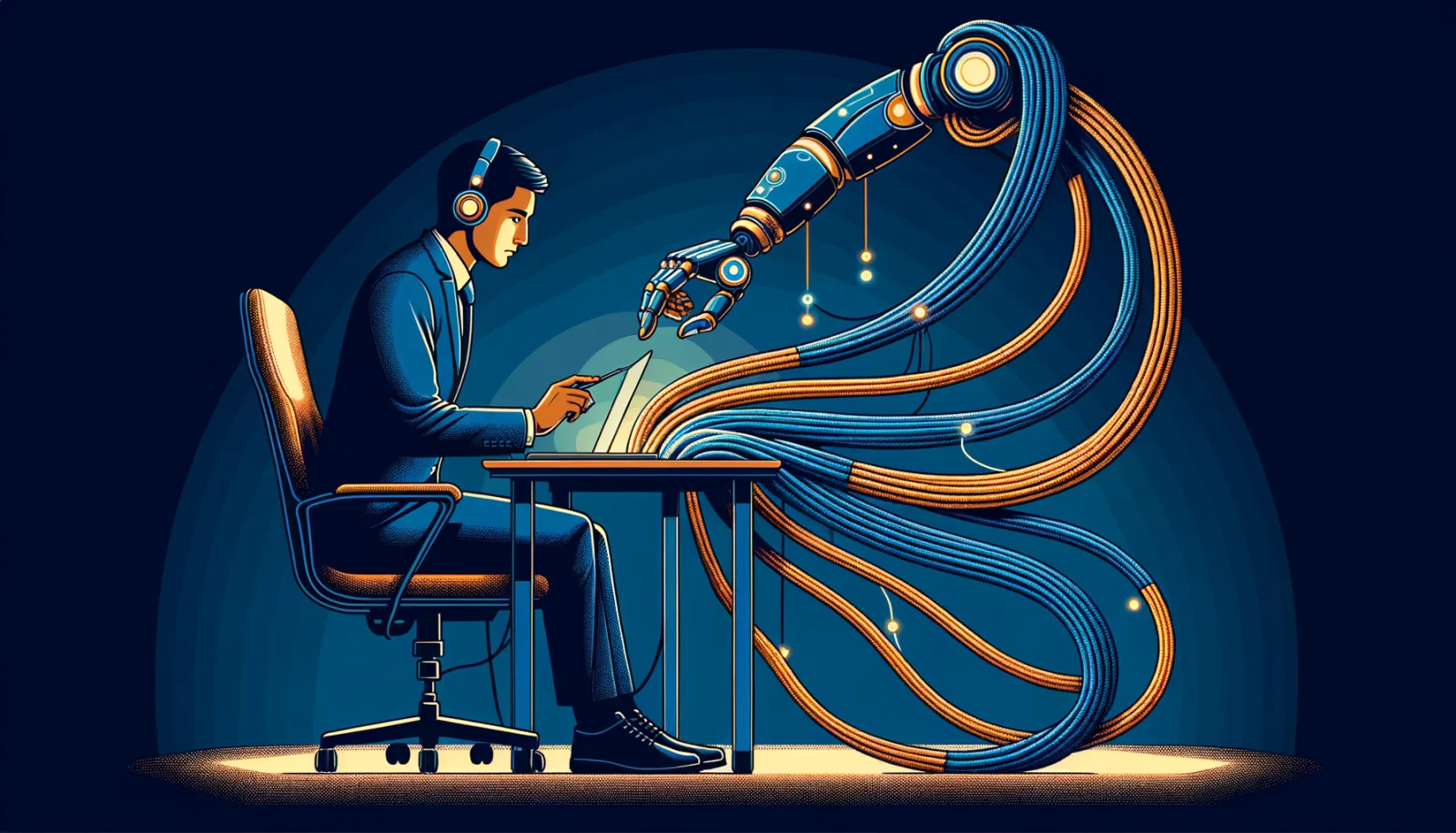
For decades, 'free software' and 'open source' were nearly synonymous — because building something worth sharing required a community. AI has dissolved that constraint. But the story isn't that open source is dying. It's that open source used to do five jobs at once, and AI is separating those threads. Some become less necessary. Others become more critical than ever.

AI , Best Practices , Tools
Read more

I Built a Tool So AI Models Could Talk to Each Other

I Built a Tool So AI Models Could Talk to Each Other

Polyphon is a desktop app I shipped this week for orchestrating multiple AI models in a single conversation. Instead of tab-juggling between Claude, GPT, and Gemini, you run all of them as voices in one shared session where they can actually read and respond to each other. Here's why I built it, what technical bets I made, and what I learned on launch day.

AI , Automation , Tools
Read more

The Blog That Builds Itself: AI Automation Behind the Scenes

The Blog That Builds Itself: AI Automation Behind the Scenes

This blog runs on a custom automation pipeline where AI agents compete, critique, and synthesize every post. Here's how the /create-blog-post command, a DALL-E 3 image generation script, pre-commit image enforcement, and WebP optimization all compose into a content system that behaves like production software.

AI , Automation , Web Development
Read more

The Rise of the Agent Wrangler

The Rise of the Agent Wrangler

AI agents can write code, fix bugs, and ship features — but who can be trusted to ship production software when most implementation is delegated? Meet the Agent Wrangler: the engineer who decomposes work, directs multiple agents, validates output, and owns the outcome. Deep technical foundations matter more than ever. The keyboard gets less important. Judgment gets everything.

AI , Best Practices , Career
Read more

Why I Left Notion and Built My Own AI Agent Plugin for Obsidian

Why I Left Notion and Built My Own AI Agent Plugin for Obsidian

After refusing to pay for yet another AI subscription I couldn't customize, I switched from Notion to Obsidian and discovered there was no way to use my existing AI services inside it. So I built one — an open source AI Agent Sidebar plugin developed with agentic engineering and the dark factory method.

AI , Automation , Tools
Read more

When Your First Version Fails: Iterating on agent-config with AI

When Your First Version Fails: Iterating on agent-config with AI

The first version of agent-config tried to impose uniform rules on Claude, Codex, Copilot, and Gemini — and it broke. The fix wasn't better engineering up front. It was accepting failure fast, letting AI handle per-agent format conversion, and shipping a v2 that actually works. Here's what the failure taught about human instinct, AI-assisted iteration, and why failing cheaper is a skill worth building.

AI , Automation , Tools
Read more

Making Your AI Subscriptions Pay for Themselves

Making Your AI Subscriptions Pay for Themselves

Between Claude Pro, ChatGPT Plus, GitHub Copilot, Cursor, and a handful of specialty tools, a serious AI stack can run $100 or more per month. This post explores a practical closed-loop strategy: give every subscription a job, pick one small revenue experiment, and use the tools themselves to generate enough income to cover the bill.

AI , Career , Productivity
Read more

Bring Your Own Key: Why Customers Are Tired of Paying Twice for AI

Bring Your Own Key: Why Customers Are Tired of Paying Twice for AI

As AI features proliferate across SaaS products, customers are waking up to a frustrating reality: they're paying for the same AI capabilities multiple times. The Bring Your Own Key (BYOK) model — letting users connect their own Anthropic, OpenAI, or Gemini API keys — is the market's answer. This post unpacks the real tradeoffs on both sides and maps out which model fits which kind of user.

AI , Productivity , Tools
Read more

Attractor: When Chaos Theory Meets AI Pipeline Orchestration

Attractor: When Chaos Theory Meets AI Pipeline Orchestration

Attractor is a DOT-based AI pipeline orchestration engine that borrows its name and philosophy from dynamical systems theory. Define your workflow as a Graphviz directed graph, and Attractor pulls multi-LLM execution toward your desired outcome — through conditional branches, retries, human gates, and failure recovery. The entire codebase is AI-generated, making it a live proof of the Software Factory paradigm it embodies.

AI , Attractor , Automation , Tools
Read more